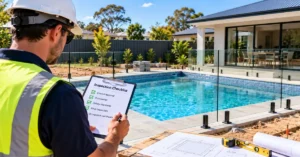
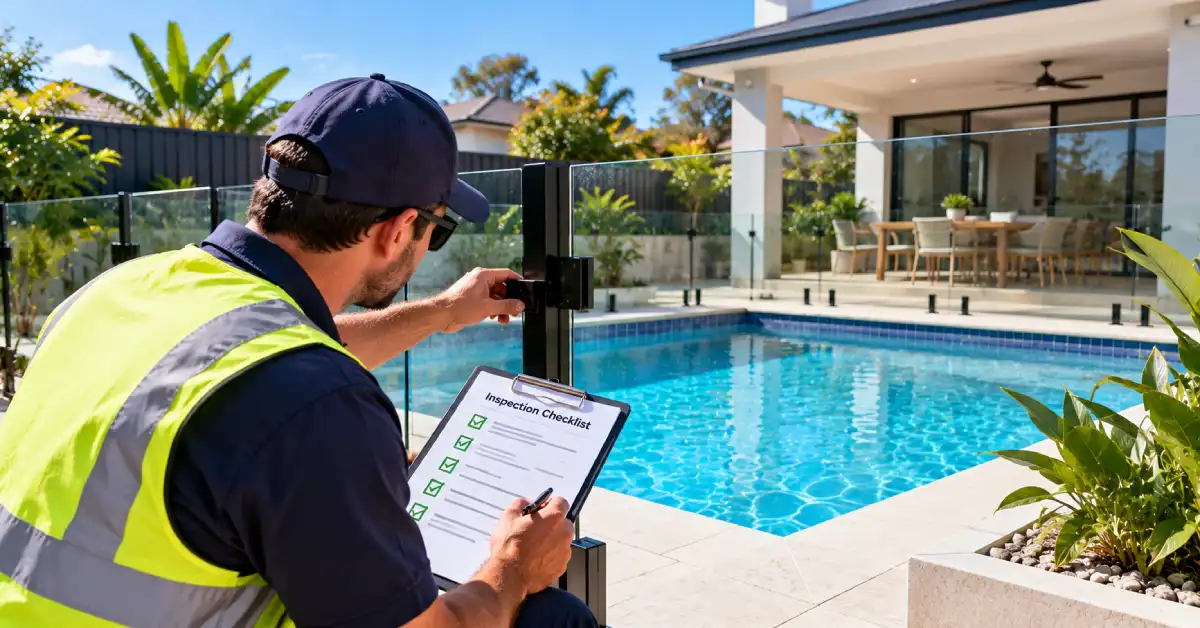
Knowing how to prepare for pool inspection NSW starts with checking the complete barrier before the inspector arrives. Test the gate, clear climbable objects, check fence gaps, inspect the CPR sign, and review any recent landscaping. These simple checks can prevent common and avoidable compliance problems.
NSW pool owners must maintain a child-resistant barrier that meets the applicable safety standard. Current NSW Government guidance also requires compliant gates, non-climbable zones, suitable fence openings, and CPR signage.
This guide is for homeowners preparing for a pool compliance inspection in NSW. It focuses on practical checks you can complete before your appointment.
National Pool Safety provides professional pool barrier inspections across Queanbeyan, Googong, Jerrabomberra, Bungendore, Yass, Murrumbateman, and surrounding NSW areas.
Key Takeaways
- Test the pool gate from several open positions.
- Keep the 900mm non-climbable zone clear.
- Check gaps under and between fence sections.
- Inspect boundary fence height and condition.
- Make sure the CPR sign remains readable.
- Check landscaping, decking, and retaining walls.
- Confirm the pool is registered in NSW.
- Gather older approvals or certificates when available.
- Do not make major barrier changes without understanding the applicable standard.
- Fix obvious defects before the inspection.
Pool Inspection Preparation Checklist
Use this table before your appointment.
| Area | What to Check |
| Gate | Self-closes and self-latches |
| Gate direction | Opens away from the pool |
| Fence | Secure and in good condition |
| Bottom gaps | Generally no more than 100mm |
| Vertical openings | Generally no more than 100mm |
| NCZ | Clear of climbable objects |
| Boundary barrier | Correct height and condition |
| CPR sign | Visible and readable |
| Landscaping | No new climbing points |
| Registration | Pool registered in NSW |
The applicable standard can vary for older pools. Therefore, do not use this table as a formal compliance certificate.
1. Test the Pool Gate
The gate is one of the first areas worth checking.
A compliant gate should close automatically without assistance. It should also latch securely after closing.
Test it from:
- fully open;
- halfway open;
- slightly open;
- only a few centimetres open.
Do not push the gate closed during the test. If it stops before reaching the latch, adjust or repair it before inspection.
The gate should also open away from the pool area.
National Pool Safety’s pool gate requirements NSW guide explains these checks in more detail.
2. Check the Gate Latch
A gate that closes but does not latch reliably can still fail. Close the gate several times. Make sure the latch engages every time.
Then gently pull the gate without operating the release. It should remain securely closed.
Also check:
- latch alignment;
- loose screws;
- damaged hardware;
- hinge movement;
- gate sagging.
Do not leave the gate propped open before the inspection.
3. Clear the Non-Climbable Zone
NSW Government guidance identifies a 900mm non-climbable zone around relevant pool barriers.
Potential climbing objects should remain outside this area.
Look for:
- chairs;
- BBQs;
- pot plants;
- ladders;
- storage boxes;
- toys;
- bins;
- tree branches;
- pool equipment.
The pool side can also require clearance from potential footholds. A fence can meet the required height but still fail because nearby objects make it climbable.
See the detailed non-climbable zone pool fence NSW guide before moving permanent features.
4. Check Fence Gaps
Walk around the complete barrier slowly.
Current NSW guidance generally limits bottom gaps and spaces between vertical fence members to 100mm.
Pay special attention where:
- soil has washed away;
- mulch has moved;
- paving has dropped;
- a fence meets a wall;
- panels meet a gate;
- ground levels change.
A gap can develop even when the fence itself has not moved. National Pool Safety’s pool fence gap requirements NSW article covers these measurements in detail.
5. Inspect the Fence Condition
A compliant barrier also needs to remain in good working condition. Check posts, panels, fixings, screws, bolts, and connections.
Look for:
- loose fence panels;
- corrosion;
- damaged glass;
- broken vertical members;
- unstable posts;
- loose fixings.
Do not ignore small maintenance problems. A loose panel can change both barrier strength and opening sizes.
6. Check the Boundary Fence
Where a property boundary forms part of the pool barrier, check it carefully.
Current NSW guidance generally requires a boundary barrier to reach 1800mm in relevant modern configurations. Older pools can operate under different standards.
Check for:
- damaged palings;
- ground-level changes;
- structures beside the fence;
- climbable objects on the pool side;
- gaps created by repairs.
Avoid assuming an older boundary fence automatically meets today’s measurements. The applicable requirements depend on the pool’s construction and alteration history.
7. Inspect the CPR Sign
A CPR sign is a simple item that owners sometimes overlook. NSW requires an appropriate resuscitation sign near the pool.
The sign should remain clearly visible and readable from at least three metres. Stand around three metres away and read it.
Replace the sign when:
- text has faded;
- graphics are damaged;
- sections are peeling;
- plants obstruct it;
- weather damage affects readability.
See National Pool Safety’s CPR sign requirements NSW pool guide for the signage rules.
8. Check Landscaping and Ground Levels
Landscaping can change pool compliance without changing the fence. Recent work deserves particular attention.
Check whether you have added:
- raised garden beds;
- retaining walls;
- paving;
- steps;
- decking;
- fixed seating;
- large plants.
These features can create footholds or reduce effective fence height. Tree growth can also affect the non-climbable zone. Inspect the barrier after landscaping, not only immediately after fence installation.
9. Review Recent Renovations
Ask whether anything around the barrier changed since the last inspection. NSW Government guidance states that barrier modifications can affect which standard applies.
Relevant changes can include:
- replacing pool fencing;
- moving a gate;
- adding decking;
- rebuilding a retaining wall;
- changing pool-side doors;
- altering ground levels.
For older pools, review AS 1926.1 pool fence requirements NSW before major rectification.
Do not make expensive structural changes based only on a generic online checklist.
10. Check Pool Registration
Pool registration and pool compliance are separate requirements. NSW swimming pools must be registered on the NSW Swimming Pool Register.
Check that your property is registered before a sale, lease, or related certification process. Registration does not prove that the barrier complies.
It simply records the swimming pool against the property. National Pool Safety’s how to register a pool in NSW guide explains the process.
Documents to Prepare for Pool Inspection NSW
For many straightforward inspections, the physical barrier remains the main focus. However, older or modified pools may require additional background information.
If available, gather:
- previous compliance certificates;
- pool construction date;
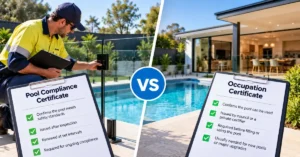
- Occupation Certificate;
- previous inspection reports;
- original approval documents;
- information about later barrier renovations.
These records can help establish the correct compliance pathway. Do not worry if every old document is unavailable. Tell the inspector what you know about the property’s history.
Should You Use a NSW Self-Assessment Checklist?
Yes.
The NSW Swimming Pool Register provides self-assessment checklists for different pool types.
Several NSW councils encourage owners to complete the appropriate checklist before an inspection. Doing so can identify simple defects before a paid reinspection becomes necessary.
Use the checklist as preparation only. It does not replace an inspection by the local council or an appropriately registered certifier.
What Happens During the Inspection?
The inspector assesses the complete child-resistant barrier against the standard applying to the property.
They can review:
- fencing;
- gates;
- latches;
- gaps;
- non-climbable zones;
- boundary barriers;
- relevant doors or windows;
- CPR signage.
If the barrier complies, the appropriate Certificate of Compliance can be issued. If it does not comply, you receive information about the identified defects.
National Pool Safety’s why pools fail inspection guide explains the most common problems.
Do Not Try to Hide a Defect
Preparation means fixing genuine problems, not temporarily hiding them.
Do not temporarily move, tape, tie, block, or disguise a defective barrier component solely for inspection. The barrier must remain safe after the inspector leaves.
Focus on permanent maintenance and proper rectification.
Frequently Asked Questions
Q1: What should I check before a pool inspection in NSW?
Test the gate, inspect fence gaps, clear the NCZ, check the CPR sign, and review boundary fencing.
Q2: What causes pool inspections to fail most often?
Gate faults, climbable objects, excessive openings, damaged barriers, and signage issues are common problems.
Q3: Should I test the gate before inspection?
Yes. Test the gate from several positions and confirm it closes and latches without assistance.
Q4; Do I need to move furniture away?
Yes. Furniture and other climbable objects can compromise the non-climbable zone.
Q5:Does the CPR sign get inspected?
Yes. Required CPR signage should remain visible, appropriate, and clearly readable.
Prepare Before Your Inspection
Knowing how to prepare for pool inspection NSW can help remove simple problems before your appointment.
Start with the gate. Then inspect gaps, clear the NCZ, check signage, and review recent changes around the barrier.
National Pool Safety provides professional pool compliance inspections across Canberra’s surrounding NSW areas.
Preparing for an upcoming pool inspection? Contact National Pool Safety for a professional barrier assessment and clear guidance on any compliance issues identified at your property.