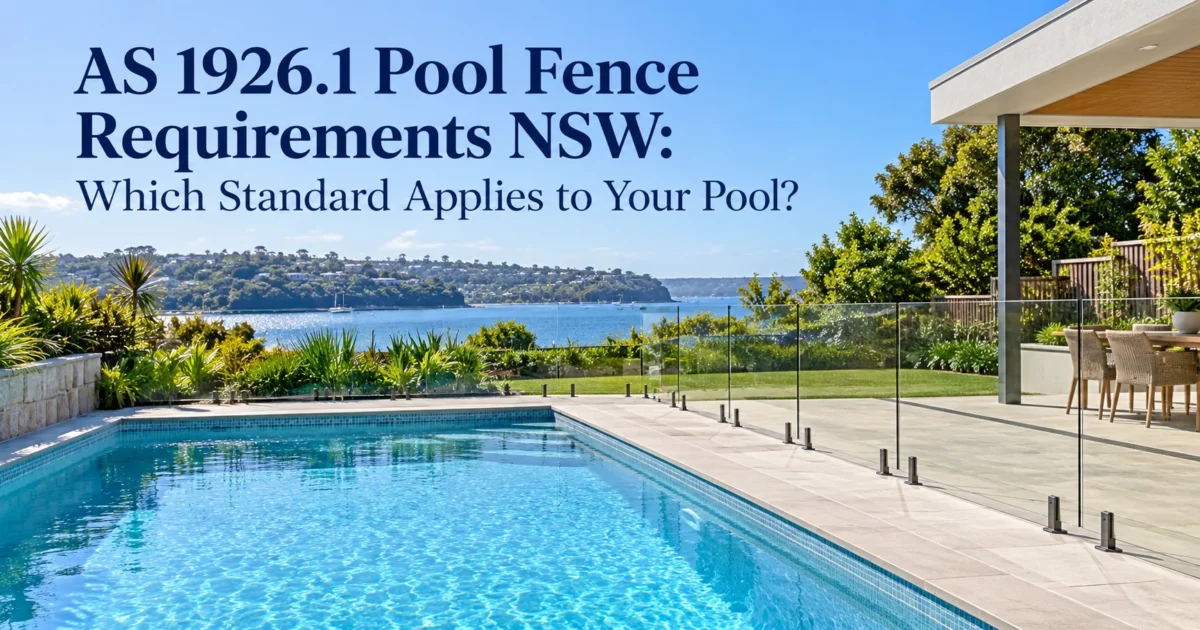
AS 1926.1 pool fence requirements NSW set many of the technical standards used to assess swimming pool safety barriers, including fence height, openings, gates and non-climbable zones. However, not every NSW pool is assessed against the same version of the Australian Standard. The applicable standard can depend on when the pool was constructed and whether its barrier has since been modified, altered or rebuilt.
Current NSW Government pool safety guidance identifies three main standards that may apply: AS 1926-1986, AS 1926.1-2007 and AS 1926.1-2012. Pools constructed from 1 May 2013 are generally assessed against AS 1926.1-2012 under the current NSW framework.
At National Pool Safety, we inspect swimming pool barriers across Canberra and surrounding NSW areas, including Queanbeyan, Googong, Jerrabomberra, Bungendore, Yass and Murrumbateman. Establishing which standard applies is an important first step before deciding whether a barrier needs repair, alteration or formal certification.
Key Takeaways
- NSW currently recognises different versions of AS 1926 depending on the pool’s construction history.
- AS 1926-1986 may apply to many pools constructed before September 2008.
- AS 1926.1-2007 may apply to pools constructed from 1 September 2008 to 30 April 2013.
- AS 1926.1-2012 generally applies to pools constructed from 1 May 2013.
- Altering or rebuilding an older pool barrier can cause current requirements to apply.
- Under current requirements, a standard pool barrier is generally at least 1200mm high.
- Boundary fencing forming part of the barrier generally requires a height of at least 1800mm.
- Common maximum openings include 100mm beneath the barrier and 100mm between vertical members.
- Relevant barriers also require a 900mm non-climbable zone.
- Gates must meet separate self-closing, self-latching and access-control requirements.
What Is AS 1926.1?
AS 1926.1 is an Australian Standard covering safety barriers for swimming pools.
It contains technical requirements intended to make pool barriers resistant to access by young children. Depending on the applicable version, requirements address areas such as barrier height, openings, non-climbable zones, gates, latches, mesh barriers and boundary fencing.
AS 1926.1 works together with NSW legislation rather than replacing it. The Swimming Pools Act, Swimming Pools Regulation and prescribed Australian Standards collectively determine what requirements apply to a particular NSW pool.
That is why finding a generic AS 1926.1 diagram online does not necessarily tell an owner which rules apply to an older pool or unusual barrier arrangement.
Which Version of AS 1926 Applies to Your NSW Pool?
Current NSW Government guidance identifies three main pool safety standards:
| Pool Construction Period | Standard That May Apply |
| Before 30 August 2008 | AS 1926-1986 |
| 1 September 2008 to 30 April 2013 | AS 1926.1-2007 |
| From 1 May 2013 | AS 1926.1-2012 |
Construction date therefore matters when assessing an existing pool.
For older properties, the inspector may also need to consider whether a historic exemption applies and whether the barrier has subsequently been altered.
This is particularly important because NSW has legacy arrangements for some older pools and certain property types. Our guide to pool fence exemptions in NSW explains when those older provisions may be relevant.
What Happens if an Older Pool Fence Is Altered?
This is one of the most important considerations for owners of older NSW pools.
A barrier that originally complied under an earlier standard or relied on an exemption should not automatically be substantially modified without checking the current requirements.
NSW Government guidance states that if a swimming pool barrier is modified or altered-including through certain house or yard renovations-the current Swimming Pools Act, Swimming Pools Regulation and AS 1926.1-2012 may apply, and previous exemptions can cease.
Examples can include:
- replacing substantial sections of pool fencing;
- relocating the barrier;
- rebuilding a pool gate;
- changing access between the house and pool area;
- significant landscaping work;
- altering structures that form part of the existing barrier.
For an older pool, understanding the applicable standard before commencing major work can help avoid unnecessary or incorrect alterations.
What Is the Minimum Pool Fence Height Under Current Requirements?
Under current NSW requirements, a standard pool barrier generally needs to be at least 1200mm high, measured from finished ground level.
Finished ground level is important because the surroundings can change after a fence is installed. Adding raised paving, decking, garden beds or other elevated surfaces beside the barrier can effectively reduce the height a child would need to climb.
The fence itself might still physically measure 1200mm from its original base, while the effective barrier height has changed because the adjacent ground level is now higher.
This is why inspectors consider the relationship between the fence and the surrounding environment, not simply the nominal dimensions supplied when the fence was installed.
What Height Does a Boundary Fence Need to Be?
Where a property boundary fence forms part of the swimming pool barrier, current NSW requirements generally require a minimum barrier height of 1800mm.
Boundary barriers also use different non-climbable-zone arrangements from a typical internal 1200mm pool fence. Owners should therefore avoid applying the same measurement approach to every part of the enclosure.
Neighbouring structures, retaining walls, ground levels and objects on the pool side of the boundary fence can all affect the assessment.
What Are the Gap Requirements Under AS 1926.1?
For many current NSW pool barriers, common maximum openings include:
- 100mm underneath the fence from finished ground level; and
- 100mm between vertical barrier members.
These limits are intended to reduce the possibility of a young child passing underneath or through the barrier. However, mesh and perforated fences can have different requirements depending on the size of their openings and the overall barrier height.
Ground movement also matters. Soil erosion, paving settlement and movement in fence posts can create excessive openings even when the barrier originally complied.
Our detailed guide to pool fence gap requirements NSW explains bottom gaps, vertical openings, gate clearances and mesh fencing separately.
What Is the 900mm Non-Climbable Zone?
AS 1926.1 does not rely on barrier height alone. Relevant pool fences also need non-climbable zones designed to prevent nearby objects or barrier components from providing convenient footholds or handholds.
Current NSW requirements commonly use a 900mm non-climbable zone, usually referred to as the NCZ.
Potential climbing hazards can include:
- chairs;
- tables;
- BBQs;
- pot plants;
- ladders;
- storage containers;
- retaining structures;
- pool equipment;
- tree branches;
- raised garden beds.
Where relevant openings in the barrier exceed 10mm, an additional pool-side clearance can also apply. Our dedicated guide to the non-climbable zone for pool fences in NSW explains the 900mm and related clearance requirements in more detail.
What Does AS 1926.1 Require for Pool Gates?
A gate is one of the most frequently used moving parts of a pool barrier, so its operation is critical to compliance.
Under current NSW requirements, a pool gate should generally:
- swing outward, away from the swimming pool;
- close automatically from any open position;
- self-latch when it reaches the closed position;
- remain securely closed when it is not being used;
- have the release mechanism positioned or protected to restrict access by young children.
A gate should also be tested from a slightly open position. A gate that closes when released from fully open may still have insufficient hinge tension to close and latch when left only a few centimetres ajar.
Our pool gate requirements NSW guide covers self-closing performance, latch position and common inspection issues in more detail.
Does AS 1926.1 Apply to Glass Pool Fencing?
Yes.
Glass can be used as part of a compliant swimming pool barrier, but the complete glass system still needs to satisfy the applicable barrier requirements.
This includes relevant requirements for:
- overall barrier height;
- openings beneath and between panels;
- gate operation;
- non-climbable areas;
- structural stability.
AS 1926.1-2012 also includes specific consideration of glass barriers, while the glazing itself must meet applicable glazing requirements.
Can Doors or the House Form Part of the Pool Barrier?
This depends significantly on the pool’s age and the legislation applying to it. Some older NSW pools can have access arrangements involving doors or windows from the residential building under historical provisions.
Newer pools generally have stricter separation requirements.
Because older access arrangements can depend on exemptions and construction dates, owners should avoid altering doors, windows or surrounding barriers without first checking which requirements apply.
A renovation that changes the existing access arrangement can affect an older exemption.
How Do You Know When Your Pool Was Built?
If you are unsure which standard applies, establishing the construction date should be one of the first steps.
Useful records can include:
- council development records;
- original pool approvals;
- Occupation Certificates;
- previous pool inspection reports;
- NSW Swimming Pool Register details;
- documentation from previous property owners.
Do not assume that the age of the house is also the age of the swimming pool. A pool may have been installed many years after the dwelling was built.
Does Meeting AS 1926.1 Automatically Mean You Receive a Compliance Certificate?
Not from a homeowner’s own assessment.
AS 1926.1 contains technical requirements, but a formal inspection considers the entire barrier system and the legal requirements applying to the individual property.
An inspector may need to assess:
- applicable Australian Standard;
- barrier height;
- bottom and vertical openings;
- gate and latch operation;
- non-climbable zones;
- boundary barriers;
- unusual structures;
- historical exemptions;
- relevant access arrangements;
- required pool safety signage.
National Pool Safety’s Swimming Pool Barrier Inspection NSW service provides a property-specific assessment rather than relying on a generic online checklist.
Why a Professional Inspection Matters for Older Pools
Older pools can be more complicated than newer installations because an inspector may need to establish both the physical condition of the barrier and its history.
Questions can include:
- When was the pool constructed?
- Which barrier standard originally applied?
- Was the fence subsequently replaced or modified?
- Did the property previously qualify for an exemption?
- Has renovation affected that exemption?
- Does the current barrier still satisfy the applicable requirements?
Making significant barrier changes before answering these questions can create unnecessary work.
An inspection can help establish the correct compliance pathway before owners proceed with substantial rectification.
Preparing for an AS 1926.1 Pool Barrier Inspection
Before an inspection, walk around the entire pool enclosure.
Test the gate from several open positions. Inspect underneath the fence for changing gaps and look between vertical members for damaged or excessive openings.
Remove obvious climbing objects from the required NCZ and check whether landscaping or ground levels have changed.
Pay particular attention to boundary fences and areas where different barrier materials join.
For an older pool, gather documentation showing construction dates, previous certificates or historical approvals where available.
Frequently Asked Questions
Question: What is AS 1926.1 in NSW?
Answer: AS 1926.1 is an Australian Standard covering swimming pool safety barriers. NSW currently uses different versions of pool barrier standards depending primarily on when the pool was constructed and whether the barrier has subsequently been altered.
Question: Which AS 1926 standard applies to my pool?
Answer: AS 1926-1986 may apply to many pools constructed before September 2008, AS 1926.1-2007 may apply to pools constructed between 1 September 2008 and 30 April 2013, and AS 1926.1-2012 generally applies to pools constructed from 1 May 2013.
Question: How high does a pool fence need to be under AS 1926.1?
Answer: Under current NSW requirements, a standard pool barrier generally needs to be at least 1200mm high from finished ground level. Boundary barriers generally require at least 1800mm.
Question: What is the maximum gap under a NSW pool fence?
Answer: For many current barriers, the opening underneath the fence should not exceed 100mm from finished ground level.
Question: What is the AS 1926.1 non-climbable zone?
Answer: Current pool barriers commonly require a 900mm non-climbable zone that is kept free of objects and structures that could help a young child climb over the barrier.
Book a NSW Pool Barrier Compliance Inspection
Understanding AS 1926.1 pool fence requirements NSW is especially important when you own an older pool, are planning barrier changes or need formal compliance documentation.
National Pool Safety provides pool barrier inspections across Canberra and surrounding NSW areas. We assess the pool against the barrier standard and legislative requirements relevant to the individual property rather than applying one generic standard to every pool.
Where the pool passes the applicable assessment and formal certification is required, our Swimming Pool Compliance Certificate NSW service provides the next step in the compliance process.
Having the existing barrier assessed before major alterations can also help you understand which standard should guide any required rectification.