Pool Fence Requirements After Renovation NSW: 2026 Guide
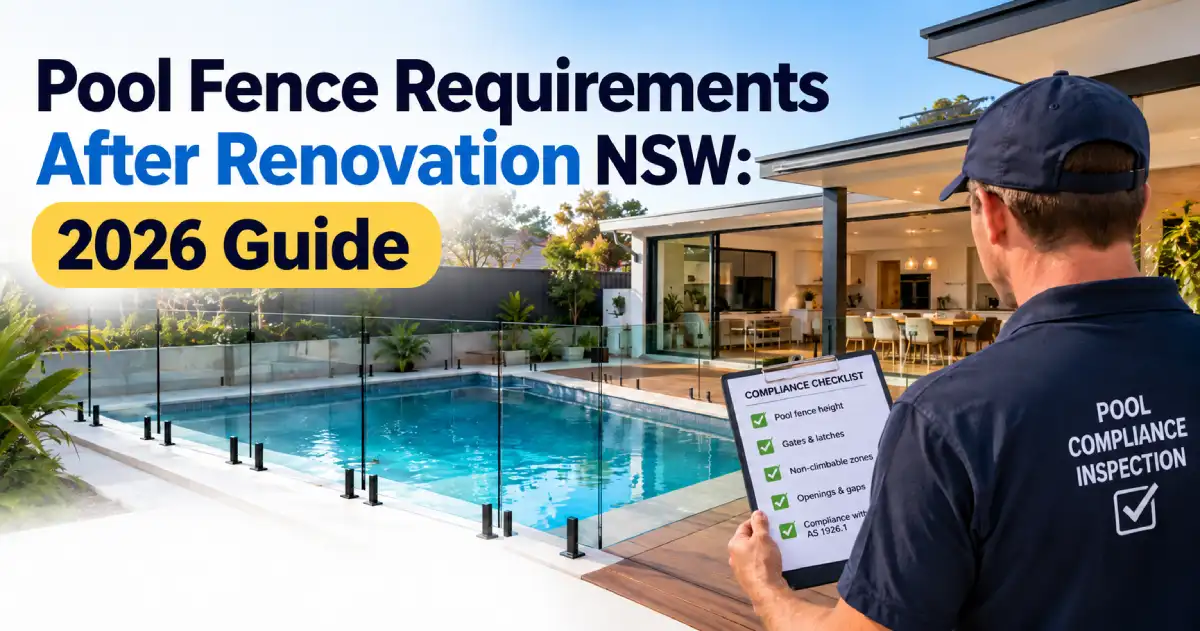
Pool fence requirements after renovation NSW can change when renovation work modifies the pool barrier, changes access to the pool, or substantially alters or rebuilds part of the barrier. In those situations, current NSW requirements may apply and an older exemption can cease. Renovation elsewhere on the property does not automatically reset an unchanged pool barrier.
The NSW Government pool safety guidance specifically warns that barrier modifications can include some house and yard renovations. This matters most for older pools where doors, windows, decking, retaining walls or existing fencing form part of the approved barrier arrangement.
National Pool Safety inspects pool barriers across Canberra’s surrounding NSW service areas.
Key Takeaways
- Not every renovation triggers current pool-fence rules.
- Current requirements can apply when the barrier or pool access is modified or rebuilt.
- Older exemptions may cease after qualifying changes.
- NSW Government guidance currently points altered barriers to AS 1926.1-2012.
- Decks, paving, retaining walls and landscaping can change effective barrier height or NCZs.
- Doors or windows used in older access arrangements need special care before renovation.
- Check compliance before demolition or major barrier changes.
When Do Current Rules Apply?
Pool fence requirements after renovation NSW generally become a concern when the work changes the barrier itself or changes the means of access to the pool.
NSW Government guidance states that if a swimming pool barrier is modified or altered, including through some house and yard renovations, the current Swimming Pools Act, Swimming Pools Regulation and AS 1926.1-2012 apply, and previous exemptions cease.
The key issue is whether the work affects the barrier or access.
A bathroom renovation away from the pool will not normally change the pool barrier. Replacing a door opening toward the pool, rebuilding fencing, raising a deck or altering a retaining wall beside the fence can.
For the broader standards by pool age, see AS 1926.1 pool fence requirements NSW.
Which Renovations Can Affect Compliance?
The following work deserves a pool-barrier review because it can change barrier height, access, gaps or climbability.
| Renovation | Why It Matters |
| Replace or move pool fencing | Changes the child-resistant barrier |
| Replace a pool gate | Can affect closing, latching and access |
| Build or raise a deck | Can reduce effective fence height |
| Change pool-side doors or windows | May alter an older access arrangement |
| Build a retaining wall | Can change levels or create footholds |
| Add new paving | Can raise finished ground level |
| Landscape near the fence | Can introduce climbable features |
| Extend the house toward the pool | Can change access and barrier layout |
Assess the proposed finished layout before work starts.
Does Replacing a Pool Fence Trigger Current Standards?
It can.
Current NSW guidance says modified or altered barriers may need to meet current requirements. The Swimming Pools Regulation 2018 also addresses substantially altered or rebuilt barriers and existing pools.
For an older pool, do not assume that replacing the old fence “like for like” preserves the previous compliance position.
Before removing it, confirm:
- when the pool was built;
- which standard currently applies;
- whether the property relies on an exemption;
- whether the planned work changes the barrier or access.
This is where pool fence requirements after renovation NSW can differ significantly between older and newer properties.
Can Renovation Remove an Exemption?
Yes, in some circumstances.
Older NSW pools can have exemptions linked to their construction date, property size or waterfront location. These exemptions do not necessarily continue after the barrier or means of access is substantially altered.
NSW Government guidance says previous exemptions cease when qualifying barrier modifications bring current requirements into play.
If your pool relies on an older arrangement, read pool fence exemptions NSW before removing or rebuilding anything.
How Can Decking Change Compliance?
A deck can affect compliance without physically touching the fence.
Current NSW requirements measure standard barrier height from finished ground level. If a new deck raises the accessible surface beside the fence, its effective height can reduce.
Decking can also introduce:
- steps within the non-climbable zone;
- new footholds beside the fence;
- changed access to the pool area;
- changed gaps at adjoining barrier sections.
Plan the fence and deck together.
Can Landscaping or Retaining Walls Matter?
Yes.
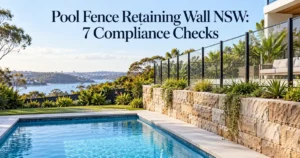
Current NSW guidance requires a 900mm non-climbable zone around relevant barriers. Raised garden beds, retaining walls, built-in seating, large pots and similar features can create footholds if placed too close.
Retaining walls and earthworks can also change finished ground levels. This can reduce effective fence height or create excessive openings underneath a panel.
For the clearance rules, see non-climbable zone pool fence NSW.
What if a Door or Window Changes?
Doors and windows are particularly important for older pools.
Some historic arrangements allowed restricted access from a residential building through compliant doors or windows. Current NSW guidance notes that these older arrangements are no longer used for newer pool barriers.
If renovation removes, relocates or replaces a door or window that forms part of an older access arrangement, the exemption or earlier compliance pathway may be affected.
A better lock alone does not necessarily preserve the old arrangement. See door opening onto pool area NSW for this specific issue.
What Current Measurements May Apply?
Where pool fence requirements after renovation NSW move a barrier onto current requirements, these common measurements may become relevant:
| Requirement | Current Guidance |
| Standard pool fence | At least 1200mm |
| Boundary barrier | At least 1800mm |
| Common bottom gap | Maximum 100mm |
| Vertical member gaps | Maximum 100mm |
| Main non-climbable zone | 900mm |
| Pool-side clear zone where relevant | 300mm |
Pool gates also need to open away from the pool, self-close and self-latch. These measurements help with planning, but the complete barrier still matters.
Should You Inspect Before Renovating?
For older pools or work close to the barrier, a pre-renovation inspection can reduce the risk of expensive rework.
An inspector can establish the applicable standard, possible exemption and existing barrier arrangement.
This is especially useful before:
- removing old fencing;
- replacing access doors;
- raising decking;
- changing retaining walls;
- altering ground levels.
National Pool Safety’s Swimming Pool Barrier Inspection NSW service can assess the complete barrier before major changes begin.
Pre-Renovation Checklist
Before work starts:
- Confirm the pool’s approximate construction date.
- Gather previous certificates or approval records.
- Identify every fence, gate, door and window controlling pool access.
- Compare current and proposed ground levels.
- Check whether new decks, steps or walls enter the NCZ.
- Confirm the proposed gate position.
- Photograph the existing barrier before demolition.
What Should You Check After Renovation?
Inspect the finished barrier, not only the plans.
Check gate operation, fence height from the final ground level, bottom gaps, non-climbable zones and joins between old and new sections.
If certification is required, the pool must still pass the applicable compliance assessment.
Frequently Asked Questions
Q1: Do all renovations trigger current pool fence rules?
No. Renovations unrelated to the pool barrier do not automatically reset the standard. The key issue is whether the work modifies the barrier or affects access to the pool.
Q2: Does replacing a pool fence require current standards?
It can. Modified, substantially altered or rebuilt barriers may need to meet current requirements, and older exemptions can cease.
Q3: Can new decking make a pool fence non-compliant?
Yes. Raised decking can reduce effective fence height or create climbable features near the barrier.
Q4: Can landscaping affect pool compliance?
Yes. Retaining walls, steps, garden beds and other fixed features can change ground levels or enter the non-climbable zone.
Q5: Can replacing a door affect an old exemption?
Yes. If the door forms part of a historic restricted-access arrangement, altering it can affect the applicable compliance pathway.
Q6: Do pool fence requirements after renovation NSW apply to every project?
No. They become particularly relevant when renovation work modifies the barrier, changes pool access or alters features that affect barrier compliance.
Need Help Before You Renovate?
Pool fence requirements after renovation NSW can become complicated when an older barrier, exemption, deck, retaining wall or access point is involved.
National Pool Safety can assess the existing barrier and identify pool-safety issues that should be considered before work begins.
Arrange a professional pool barrier inspection before making major changes around your pool, so the finished layout is easier to assess and rectify if needed.