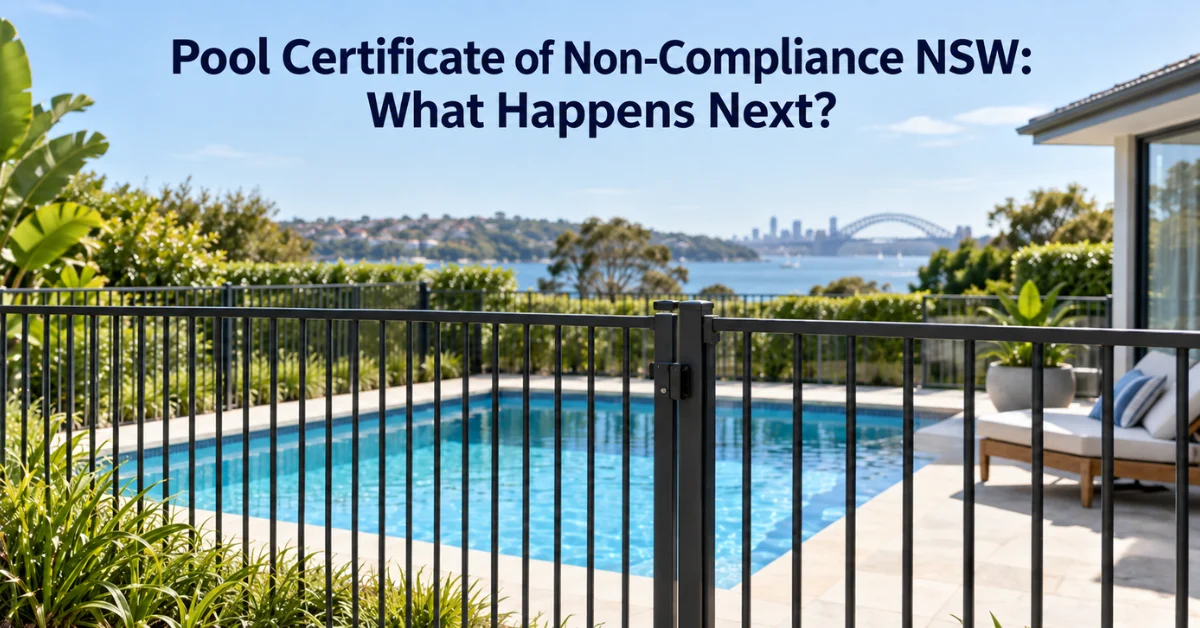
Pool certificate of non-compliance NSW means an inspected swimming pool or spa has not met the requirements needed for a Certificate of Compliance. The certificate records that the barrier is non-compliant, while the owner also receives information explaining the defects and what needs to be corrected.
A Certificate of Non-Compliance can be used in some NSW property sales, but it cannot be used to rent a residential property with a pool. Under current NSW rules, it is generally valid for one year unless a Certificate of Compliance is issued earlier.
The NSW Government pool safety guidance explains how non-compliance certificates are used for inspections, sales and rentals.
At National Pool Safety, we inspect pool barriers across Canberra and surrounding NSW areas. If your pool does not pass, the next step is to understand the defects, complete the required rectification and arrange a reinspection.
Key Takeaways
- A Certificate of Non-Compliance means the pool did not meet the requirements for a Certificate of Compliance.
- It is generally valid for 12 months from the issue date.
- It stops being valid if a Certificate of Compliance is later issued.
- It may be attached to a NSW contract for sale in eligible circumstances.
- The buyer generally has 90 days from settlement to rectify listed defects and obtain compliance.
- A Certificate of Non-Compliance cannot be used to rent an applicable residential property.
- With a private registered certifier, unresolved non-compliance may be referred to council after six weeks.
- If the pool poses a significant risk to public safety, council must be notified immediately.
What Is a Pool Certificate of Non-Compliance NSW?
A Certificate of Non-Compliance is issued after an inspection when the swimming pool does not satisfy the requirements for a Certificate of Compliance.
The document records important information including the property address, inspection date and whether the pool is considered a significant risk to public safety.
Where a registered private certifier conducts the inspection, the owner also receives a written notice explaining why the pool does not comply and what needs to be done.
This gives the owner a clear starting point for rectification rather than leaving them to guess which parts of the barrier failed.
Local councils and registered swimming pool inspectors can inspect existing pools and spas and issue either a Certificate of Compliance or Certificate of Non-Compliance.
What Can Cause a Pool to Be Non-Compliant?
A pool can fail because of one issue or several defects around the barrier.
Common problems include a gate that does not self-close, a latch that fails to engage, excessive gaps, climbable objects inside the non-climbable zone, damaged fencing or CPR signage that does not meet requirements.
The applicable standard can also depend on when the pool or barrier was constructed or altered. For a broader defect checklist, see National Pool Safety’s guide to why pools fail inspection.
How Long Is a Certificate of Non-Compliance Valid?
A NSW Certificate of Non-Compliance is generally valid for one year from the date of issue.
It stops being valid earlier if a Certificate of Compliance is subsequently issued for the same pool. This differs from a Certificate of Compliance, which is generally valid for three years. If you are comparing certificate periods, see our guide to pool compliance certificate validity.
What Should You Do After Receiving One?
Start with the written defect notice or inspection report. Review each issue carefully and identify which items can be addressed immediately and which require a contractor or specialist.
A practical approach is to:
- review every defect listed by the inspector;
- remove simple hazards such as movable climbable objects;
- arrange repairs for gates, latches, fencing or fixed structures;
- clarify any unclear defect with the inspector; and
- arrange a reinspection once the work is complete.
National Pool Safety provides swimming pool reinspection services after rectification work has been completed.
Is There a Six-Week Deadline?
The six-week period is particularly important when the original inspection is carried out by a registered private certifier.
Under section 22E of the NSW Swimming Pools Act, the certifier must give the owner written notice when the pool does not comply. If a Certificate of Compliance has not been issued within six weeks of the inspection, the private certifier must forward the notice to the local council.
This does not mean the Certificate of Non-Compliance itself expires after six weeks. Its normal validity period remains one year. The six-week period relates to the certifier’s duty to notify council about unresolved non-compliance.
If the certifier believes the pool poses a significant risk to public safety, council must be notified immediately instead of waiting six weeks.
Can You Sell a Property With a Non-Compliant Pool?
Yes, in eligible circumstances.
For a NSW property sale involving a swimming pool or spa, the contract generally needs the pool registration certificate and one of the prescribed pool documents.
These may include:
- a relevant Occupation Certificate;
- a valid Certificate of Compliance; or
- a Certificate of Non-Compliance.
If a valid Certificate of Non-Compliance is attached to the contract, the purchaser generally takes on the obligation to rectify the listed defects after settlement.
The buyer normally has 90 days from settlement to complete the work and obtain a Certificate of Compliance. However, this 90-day arrangement does not apply in the same way when the certificate states that the pool poses a significant risk to public safety.
For the wider sale requirements, read our guide on selling a house with a pool in NSW.
Can You Rent a Property With a Certificate of Non-Compliance?
No.
This is a major difference between selling and renting a NSW property with a swimming pool.
When an applicable residential tenancy agreement is entered into, the landlord or agent must provide the tenant with a valid Certificate of Compliance or a relevant Occupation Certificate.
A Certificate of Non-Compliance cannot be used instead. Therefore, if a rental property’s pool fails inspection, the defects generally need to be rectified and the correct compliance documentation obtained before the tenancy requirement can be satisfied.
This is why landlords and property managers should organise inspections early rather than immediately before a new tenant is due to sign.
What Happens if the Pool Is a Significant Risk to Public Safety?
A Certificate of Non-Compliance records whether the inspector considers the pool to pose a significant risk to public safety.
If a registered certifier considers the pool a significant risk, the certifier must forward the notice to the local council immediately. For other non-compliance, the owner normally has the six-week period to achieve compliance before the private certifier must notify council.
The distinction also affects property sales because the usual 90-day post-settlement rectification provision does not apply in the same way to a pool identified as a significant public-safety risk.
Owners should act promptly and follow the instructions provided by the inspector or council.
Do You Need a Reinspection After Repairs?
Yes, if you want to obtain a Certificate of Compliance.
Completing the repair does not automatically convert the existing document into a compliance certificate. The barrier needs to be checked again so the inspector can confirm the identified defects have been corrected and the pool now satisfies the applicable requirements.
Once the requirements are satisfied, the appropriate Certificate of Compliance can be issued.
National Pool Safety’s Swimming Pool Safety Inspection NSW service covers initial inspections and the wider compliance process.
How to Prepare for the Reinspection
Work directly from the defect list.
Test the pool gate from several open positions and make sure it closes and latches without assistance. Check fence gaps and remove climbable objects from relevant non-climbable zones.
Confirm that required CPR signage remains visible and legible. Where structural work was required, make sure it has been completed before the inspector returns.
These checks cannot guarantee compliance, but they can reduce the chance of straightforward defects remaining unresolved at reinspection.
Frequently Asked Questions
What does a pool Certificate of Non-Compliance mean in NSW?
It means the pool or spa did not satisfy the requirements for a Certificate of Compliance when inspected. The owner receives information explaining the defects and what needs to be corrected.
How long is a Certificate of Non-Compliance valid?
It is generally valid for one year from its issue date. It stops being valid if a Certificate of Compliance is subsequently issued and is not valid during a residential tenancy agreement.
Can I sell my NSW property with a non-compliant pool?
In eligible circumstances, yes. A valid Certificate of Non-Compliance can be attached to the sale contract, and the buyer generally has 90 days after settlement to rectify the listed defects.
Can I rent a property using a Certificate of Non-Compliance?
No. A valid Certificate of Compliance or relevant Occupation Certificate is required for an applicable residential tenancy.
What happens if I do not fix the pool within six weeks?
Where a registered private certifier issued the notice, they must notify the local council if a Certificate of Compliance has not been issued within six weeks.
What if the pool poses a significant safety risk?
A registered certifier must notify the local council immediately if the pool is considered a significant risk to public safety.
Do I need another inspection after fixing the defects?
Yes, where you want a Certificate of Compliance. The completed work needs to be assessed before compliance can be confirmed.
Book a NSW Pool Compliance Reinspection
Receiving a pool certificate of non-compliance NSW does not automatically mean the entire fence needs replacing. It means the inspected barrier did not meet all applicable requirements at that time.
National Pool Safety provides swimming pool inspections and reinspections across Canberra and surrounding NSW areas, including Queanbeyan, Googong, Jerrabomberra, Bungendore, Yass and Murrumbateman.
If your pool has failed an inspection, review the report, complete the required rectification and arrange a follow-up assessment once the work is ready.
You can view our NSW pool safety inspection service or contact National Pool Safety to arrange the next inspection.