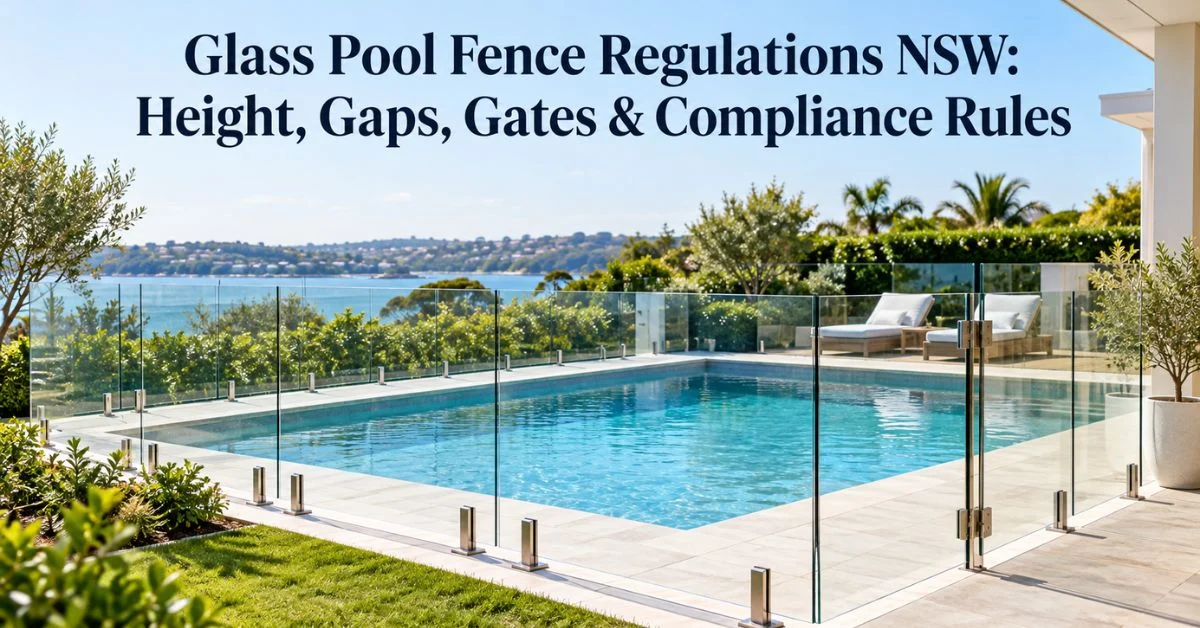
Glass pool fence regulations NSW require glass barriers to meet the same child-resistant pool safety requirements as other compliant pool fences, including minimum barrier height, controlled gaps, non-climbable zones and a self-closing, self-latching gate. The glass itself must also satisfy the relevant glazing requirements, including AS 1288 where applicable.
The NSW Government pool safety guidance confirms that NSW pool barriers must comply with the applicable Australian Standard and remain properly maintained. For many current pools, this includes AS 1926.1-2012.
At National Pool Safety, we inspect glass, metal and other pool barrier systems across Canberra and surrounding NSW areas, including Queanbeyan, Googong, Jerrabomberra, Bungendore, Yass and Murrumbateman.
This guide focuses specifically on glass pool fencing and explains the measurements, gate operation, glazing, non-climbable zones and common issues owners should check before a compliance inspection.
Key Takeaways
- A typical NSW pool barrier must be at least 1200mm high from finished ground level.
- Glass pool fencing does not receive separate relaxed height or access rules because it is transparent.
- Openings under the barrier generally must not exceed 100mm.
- Glass gates must close and latch automatically and generally swing away from the pool area.
- Glass used as part of a pool barrier must meet relevant glazing requirements, including AS 1288.
- Spigots, hinges, fittings and surrounding structures must not create prohibited climbing opportunities.
- A 900mm non-climbable zone is relevant around standard pool barriers.
- Ground movement, loose hardware and gate misalignment can make an originally compliant glass fence non-compliant.
- The standard applying to an older pool can depend on when the pool was constructed and whether the barrier has later been altered.
What Are the Glass Pool Fence Regulations in NSW?
Glass pool fencing must function as a child-resistant safety barrier.
The appearance and construction material may be different from aluminium or metal fencing, but the purpose of the barrier remains the same: restricting unsupervised access to the swimming pool.
Current NSW Government guidance says a standard pool fence must generally be at least 1.2 metres high, measured from finished ground level.
For glass pool fencing, an additional consideration is the glazing itself. AS 1926.1-2012 specifies that glass used in pool barriers must comply with AS 1288, the Australian Standard dealing with glass in buildings.
This means compliance involves more than simply installing glass panels that look tall enough.
How High Must a Glass Pool Fence Be in NSW?
A standard glass pool fence generally needs to be at least 1200mm high when measured from finished ground level.
The word “finished” is important. Changes to the surface beside a glass fence can affect the effective barrier height.
For example, adding raised paving, decking, garden structures or another elevated surface beside the fence may reduce the effective height measured from the accessible side.
The glass panel itself may still physically be 1200mm tall, but the surrounding environment can change the compliance position. Owners should therefore consider both the panel dimensions and the ground or structures beside it.
Where a boundary fence forms part of the pool barrier, different requirements apply. A boundary barrier generally needs to be at least 1800mm high.
What Is the Maximum Gap Under a Glass Pool Fence?
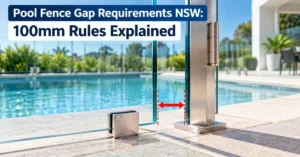
For standard NSW pool barriers, the opening between the bottom of the barrier and finished ground level generally must not exceed 100mm.
That rule also matters for glass fencing.
Frameless glass panels are commonly installed above paving or another finished surface using spigots or similar supports. The opening beneath the glass should therefore be checked across the entire panel rather than at only one point.
Potential problems can develop because of:
- paving settlement;
- ground movement;
- loose panels;
- changes in landscaping;
- movement around supporting hardware;
- replacement of surrounding surfaces.
A glass panel can remain visually straight while the surface underneath moves enough to create a larger opening. For more detail about openings under and around barriers, see our guide to pool fence gap requirements NSW.
Do Gaps Between Glass Panels Matter?
Yes.
Frameless and semi-frameless systems often contain spaces between individual glass panels, posts or gates.
These openings form part of the overall barrier design and must comply with the requirements applying to that system.
Owners should pay particular attention to transition points such as:
- between adjacent glass panels;
- beside gate panels;
- between glass and masonry;
- where glass meets another fence material;
- beside fixed posts or structures.
A barrier needs to remain continuous around the required pool enclosure. A compliant-looking glass panel does not compensate for an inappropriate opening where two sections of the barrier meet.
What Glass Is Required for a Pool Fence?
The glass used in a pool safety barrier must be suitable for its structural and safety purpose.
AS 1926.1-2012 states that glass used in pool barriers must comply with AS 1288. The Hills Shire Council guidance on glass barriers also explains that glass used as a pool barrier must satisfy AS 1926.1 requirements and be designed and certified in accordance with the applicable glazing standard.
For owners, the practical point is simple: do not choose glass panels, hardware or installation methods purely according to appearance. The complete glass barrier system, including panels, supports and fixings, needs to be suitable for its intended use.
Where structural or glazing certification is required, documentation from the installer or relevant professional can become important.
Are Frameless Glass Pool Fences Allowed in NSW?
Yes. Frameless glass can be used for a NSW pool barrier when the completed system satisfies the applicable safety and glazing requirements.
The same applies to semi-frameless systems. There is no general exemption from pool barrier rules because glass provides a clear view through the fence.
A frameless system still needs to provide the required barrier height and safe openings while avoiding climbable features. The gate also needs to function properly.
This is why choosing a compliant system and correct installation matters more than whether the fence is described as frameless or semi-frameless.
What Are the Rules for a Glass Pool Gate?
A glass pool gate is one of the most important parts of the barrier because it moves every time someone enters or leaves the pool area.
Current NSW pool safety guidance requires pool gates to:
- swing outward, away from the pool area;
- close automatically from any open position;
- self-latch when they close;
- remain securely closed when not being used.
Glass gates can develop the same mechanical problems as other pool gates. Hinges can lose adjustment, gates can drop slightly and latches can move out of alignment.
It should return to the closed position and engage the latch without needing to be pushed or pulled. Our dedicated pool gate requirements NSW guide explains the gate requirements in more detail.
Can Glass Fence Hardware Create a Climbing Point?
Potentially.
One benefit of glass fencing is its smooth surface, which can provide fewer obvious footholds than some traditional fence designs.
However, the complete installation still needs to be considered. Spigots, hinges, brackets, nearby walls and other fittings can affect the non-climbable area depending on their size, shape and position.
AS 1926.1 also addresses projections and indentations within relevant non-climbable zones because horizontal surfaces can potentially create footholds.
This does not mean every visible fitting on a glass fence is automatically non-compliant. It means the barrier should be assessed as a complete system rather than assuming that a smooth glass panel alone solves every climbability issue.
Does a Glass Pool Fence Need a 900mm Non-Climbable Zone?
Yes, the applicable non-climbable-zone requirements still matter. NSW Government guidance identifies a 900mm non-climbable zone around relevant pool barriers.
Potential climbing objects can include:
- outdoor chairs; tables; pot plants;
- BBQs; storage boxes; pool equipment;
- retaining walls; raised garden beds;
- tree branches.
Glass may be difficult to climb directly, but placing a chair or raised planter beside it can reduce the effective protection provided by the barrier.
The pool side can also have clearance requirements depending on the barrier design.For a detailed explanation, see our guide to the non-climbable zone for pool fences in NSW.
Can Landscaping Affect Glass Pool Fence Compliance?
Yes.
This is particularly important because glass fencing is often installed as part of a landscaped outdoor area. A garden bed, retaining wall or raised surface that was not present during the original installation can change the relationship between the fence and surrounding ground.
Vegetation can also grow into the non-climbable zone. When landscaping near glass pool fencing, consider more than appearance. Check whether the finished ground level, climbing opportunities or access around the gate will change.
A landscape modification does not need to physically touch the glass to affect compliance.
What Problems Commonly Develop With Glass Pool Fencing?
Glass barriers can remain in good condition for many years, but their fittings and surrounding surfaces still require attention.
Common issues worth checking include:
Gate Misalignment
The glass gate may drop or shift enough that the latch no longer engages automatically.
Weak Self-Closing Action
Hinges may no longer return the gate completely from a small opening.
Loose Hardware
Spigots, clamps or other components can loosen and affect the stability or alignment of the barrier.
Excessive Bottom Clearance
Paving or surrounding ground may move and increase the gap underneath a glass panel.
New Climbing Opportunities
Furniture, pots, landscaping or permanent structures may be introduced beside the fence.
Changes to the Barrier
Replacing one panel, gate or section without considering the original barrier standard can create a compliance issue.
These are some of the reasons a visual check from a distance is not enough to determine whether a glass pool barrier complies.
Which Australian Standard Applies to an Older Glass Pool Fence?
NSW currently recognises different versions of the pool safety standard depending on when the pool was constructed.
Current NSW Government guidance identifies:
| Pool Construction Period | Standard That May Apply |
| Before 30 August 2008 | AS 1926-1986 |
| 1 September 2008 to 30 April 2013 | AS 1926.1-2007 |
| From 1 May 2013 | AS 1926.1-2012 |
Importantly, modifying or altering an existing pool barrier can cause current requirements to apply and can affect previous exemptions. Owners considering replacing an older fence with frameless glass should therefore establish the applicable compliance position before substantial barrier work begins.
How to Check a Glass Pool Fence Before an Inspection
Walk around the entire barrier rather than checking only the main glass panels. Look for movement, loose fittings, damaged glass or changing gaps.
Measure or closely inspect the clearance beneath the panels, particularly where paving has shifted. Test the gate several times from different positions and confirm that it closes and latches automatically.
Check the area around the glass for furniture, pots, landscaping and fixed structures that may compromise the non-climbable zone. Also inspect locations where glass joins another barrier material.
These simple checks can identify visible problems, but they do not replace an assessment against the standard applying to the property.
Frequently Asked Questions
What are the main glass pool fence regulations in NSW?
Answer: Glass pool barriers generally need to satisfy the same child-resistant barrier requirements as other pool fences, including compliant height, openings, non-climbable zones and gate operation. Glass used in the barrier must also comply with relevant glazing requirements.
How high must a glass pool fence be in NSW?
Answer: A standard pool barrier generally needs to be at least 1200mm high when measured from finished ground level.
What is the maximum gap under a glass pool fence?
Answer: For many NSW pool barriers, the gap between the bottom of the barrier and finished ground level must not exceed 100mm.
Does a frameless glass pool gate need to self-close?
Answer: Yes. A pool gate should close automatically from any open position and self-latch when it reaches the closed position.
Does a glass pool fence need a non-climbable zone?
Answer: Yes. The relevant non-climbable-zone requirements still apply even though the main barrier surface is smooth glass.
Can paving changes make a glass pool fence non-compliant?
Answer: Yes. Changes to finished ground level can alter effective fence height or the clearance beneath the glass barrier.
Does pool fence glass need to comply with AS 1288?
Answer: AS 1926.1-2012 specifies that glass used in swimming pool barriers must comply with AS 1288. The complete barrier still needs to satisfy the applicable pool safety requirements.
Get a Glass Pool Fence Inspection in NSW
A glass barrier can look modern, strong and well maintained while still having a compliance issue involving its gate, gaps, surrounding surfaces or non-climbable zone.
National Pool Safety provides swimming pool barrier inspections in NSW for homeowners, landlords, property managers and property professionals across surrounding NSW areas.
Our inspections assess the complete barrier system, including glass panels, gates, openings, barrier height, non-climbable zones and relevant access conditions.
If you require formal certification for a sale, lease or other property requirement, see our Swimming Pool Certificate of Compliance NSW service.