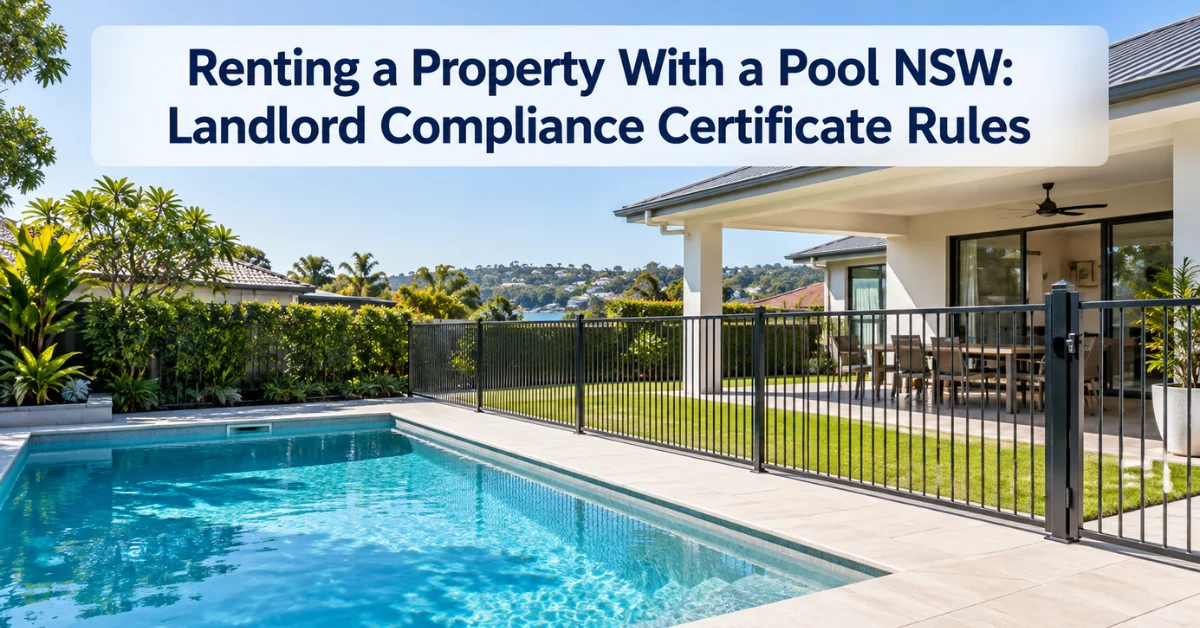
Renting a property with a pool NSW requires the landlord or agent to provide the tenant with a valid swimming pool Certificate of Compliance or a relevant Occupation Certificate when the residential tenancy agreement is entered into. A Certificate of Non-Compliance cannot be used instead for a rental property.
The swimming pool or spa must also be registered, and the pool barrier must continue to meet the applicable NSW safety requirements. These obligations are important for landlords, property managers and owners preparing a home for a new tenancy.
The NSW Government guidance for swimming pools in rental properties confirms the certificate requirements that apply when a tenant signs a residential tenancy agreement.
At National Pool Safety, we provide swimming pool inspections and compliance certification across surrounding NSW areas including Queanbeyan, Googong, Jerrabomberra, Bungendore, Yass, Goulburn and Murrumbateman.
Key Takeaways
- A NSW rental property with a swimming pool or spa generally needs a valid compliance document before a new tenancy begins.
- The landlord or agent must provide the tenant with a valid Certificate of Compliance or relevant Occupation Certificate.
- A relevant Occupation Certificate generally needs to have been issued within the previous three years.
- A Certificate of Non-Compliance cannot be used to rent a residential property.
- The swimming pool or spa should be registered on the NSW Swimming Pool Register.
- Pool fences, gates, latches and other safety barriers must continue to be maintained.
- Different rules can apply to lots in strata or community schemes containing more than two lots.
- Landlords should organise an inspection before advertising or finalising a tenancy if the existing certificate has expired or pool compliance is uncertain.
What Do You Need Before Renting A Property With A Pool NSW?
Before entering into a new residential tenancy agreement, a landlord should confirm three important things.
First, the swimming pool or spa should be properly registered.
Second, the pool barrier must comply with the requirements applying to that particular property.
Third, the landlord or managing agent must have the correct certificate available for the tenant.
For most applicable residential rental properties, the landlord or agent must provide one of the following when the tenancy agreement is entered into:
- a valid swimming pool Certificate of Compliance; or
- a relevant Occupation Certificate issued within the required period.
This makes the compliance inspection an important part of preparing a pool property for lease.
If you do not currently have a valid certificate, National Pool Safety’s Swimming Pool Certificate of Compliance NSW service explains the inspection and certification process.
Can You Rent a NSW Property With a Certificate of Non-Compliance?
No.
This is one of the most important differences between selling and renting a property with a pool in NSW.
A property being sold can, in certain circumstances, have a Certificate of Non-Compliance attached to the contract. The buyer may then take responsibility for rectifying the listed defects after settlement.
The same approach is not available for a residential tenancy.
NSW Government guidance clearly states that a Certificate of Non-Compliance cannot be used to rent a property with a swimming pool or spa.
Therefore, a landlord cannot simply obtain an inspection showing defects, attach that document to the tenancy agreement and leave the new tenant to deal with the pool barrier later.
The pool needs the appropriate valid compliance documentation before the relevant tenancy requirement can be satisfied.
What Is a Swimming Pool Certificate of Compliance?
A Certificate of Compliance confirms that the registered swimming pool was inspected and found to comply with the applicable NSW swimming pool safety requirements at the time of inspection.
An inspection typically considers the complete pool barrier rather than only the fence.
Depending on the property, this can include:
- pool fence height and condition;
- gate operation;
- self-closing hinges;
- self-latching mechanisms;
- openings beneath and within the barrier;
- non-climbable zones;
- boundary fencing;
- doors and windows associated with older barrier arrangements;
- CPR signage; and
- other relevant access points.
Landlords preparing a property for lease can arrange a swimming pool safety inspection in NSW before the tenancy starts.
How Long Is a NSW Pool Compliance Certificate Valid?
A NSW swimming pool Certificate of Compliance is generally valid for three years from the date of issue.
That does not mean the owner can ignore the barrier during those three years. Pool owners still have an ongoing obligation to maintain the barrier and keep gates and other access points functioning properly.
A gate hinge can weaken, a latch can move out of alignment or landscaping can create a new climbing point long before the certificate reaches its expiry date.
If you already have a certificate but are unsure whether it can still be used, see our guide to pool compliance certificate validity.
Does the Pool Have to Be Registered Before Renting?
Yes, pool registration is an important part of NSW pool compliance.
Swimming pools and spas covered by the legislation should be registered on the NSW Swimming Pool Register.
Registration and compliance certification are not the same thing. Registering a pool records information about the pool and property. It does not automatically prove that the fence, gate and other safety barriers comply.
Compliance must be assessed separately.
If the property has recently changed ownership or you are preparing it for its first tenancy, check the registration status before arranging certification. Our guide on how to register a pool in NSW explains the process in more detail.
What Pool Fence Requirements Apply to a Rental Property?
A rental property does not receive relaxed pool fencing rules simply because tenants rather than the owner will occupy the home. The pool barrier must comply with the standards applicable to the particular pool.
The correct standard may depend on factors such as:
- when the pool was constructed;
- when the barrier was installed;
- whether the barrier has been altered;
- the type and age of the property; and
- whether a valid historical exemption applies.
For many pools, inspectors will closely examine the gate because it is a moving component that can deteriorate with regular use. A gate should close and latch correctly without someone needing to push or pull it into position.
Before arranging a rental compliance inspection, landlords can review our guide to the most common reasons pools fail inspection.
Who Is Responsible for Pool Safety: Landlord or Tenant?
The landlord has important legal responsibilities before renting the property, including ensuring the required pool compliance documentation is available.
Once the tenancy starts, responsibilities for everyday pool care and maintenance can also depend on the residential tenancy agreement.
NSW Fair Trading recommends that tenants review their tenancy agreement to understand who is responsible for pool or spa maintenance and repairs.
A tenant may, for example, be responsible for agreed routine pool care. That does not remove the owner’s responsibility to address safety defects that require repair or affect the property’s compliance.
Both parties should treat a damaged pool barrier seriously.
What Should Landlords Check Before a Pool Inspection?
A few simple checks can identify obvious problems before the formal inspection.
Start with the pool gate.
Open it fully and release it. Then repeat the test from halfway and from only a small opening. The gate should close and latch without assistance.
Next, inspect the barrier for loose panels, damaged sections and excessive openings.
Look around the fence for objects that could help a child climb over it. Outdoor furniture, pot plants, storage containers, BBQs and landscaping can all affect the non-climbable area.
Also check the CPR sign and ensure it remains clearly visible and in good condition.
These checks do not replace a professional inspection, but they can reduce the chance of straightforward maintenance problems delaying certification.
What Happens if the Pool Fails the Rental Inspection?
If an inspector finds that the pool barrier does not meet the applicable requirements, a compliance certificate cannot simply be issued regardless.
The identified defects will need to be addressed. The required work can vary considerably.
Some pools may only need gate adjustment, latch repair or removal of climbable objects. Others may need changes to fence height, openings, boundary fencing or an older access arrangement.
The important point for landlords is timing.
Because a Certificate of Non-Compliance cannot be substituted for a valid certificate when renting the property, leaving the inspection until immediately before a tenant signs can create avoidable problems.
Do Strata Properties With Shared Pools Follow the Same Rule?
There is an important exception for some strata and community properties.
The requirement to provide the individual tenant with the certificate in this context does not apply in the same way where the property is a lot in a strata scheme or community scheme containing more than two lots.
That does not mean the shared swimming pool can be non-compliant.
The pool still remains subject to applicable swimming pool safety and maintenance requirements. Responsibility for the common-property pool and barrier may sit with the owners corporation or relevant scheme rather than an individual lot owner.
Landlords and property managers dealing with strata properties should therefore identify whether the pool forms part of common property and confirm the relevant documentation with the strata manager or owners corporation.
Can You Rent a Property While Waiting for Pool Repairs?
Landlords should be very careful about entering into a tenancy while the pool remains non-compliant.
For an applicable rental property, a Certificate of Non-Compliance cannot be used as the required document.
If defects are found, the practical approach is to complete the required rectification and obtain the necessary compliance documentation before the tenancy agreement is entered into.
This is another reason to organise the inspection early rather than waiting until a tenant has already been selected.
Preparing a NSW Rental Property With a Pool
Pool compliance should form part of the landlord’s preparation process alongside smoke alarms, property condition, locks and other tenancy requirements.
A useful sequence is:
- confirm that the pool or spa is registered;
- check whether an existing compliance or relevant occupation certificate is still valid;
- inspect the barrier for obvious defects;
- arrange a professional inspection if a new certificate is required;
- complete any necessary rectification;
- obtain the valid compliance documentation; and
- provide the required certificate to the tenant when the tenancy agreement is entered into.
Keeping copies of inspection reports, certificates and relevant repairs can also make future renewals, property management and sales easier.
Frequently Asked Questions
Do you need a pool compliance certificate to rent a property in NSW?
Generally, yes. When a relevant residential tenancy agreement is entered into, the landlord or agent must provide the tenant with a valid Certificate of Compliance or a relevant Occupation Certificate. An exception applies to certain strata and community schemes with more than two lots.
Can a landlord rent a property with a non-compliant pool?
A Certificate of Non-Compliance cannot be used as the required certificate for renting an applicable residential property with a pool. Identified defects should be rectified so the appropriate compliance documentation can be obtained.
How long does a pool compliance certificate last in NSW?
A NSW swimming pool Certificate of Compliance is generally valid for three years from its issue date. The pool barrier must still be properly maintained throughout that period.
Does the tenant maintain the swimming pool?
Routine pool maintenance responsibilities can depend on the tenancy agreement. Tenants should check their agreement, while safety defects affecting the pool fence, gate or legal compliance should be reported promptly.
Does a rental pool need to be registered in NSW?
Yes. Swimming pools and spas covered by NSW legislation should be registered on the NSW Swimming Pool Register. Registration alone does not establish that the pool is compliant.
Can a property manager arrange the pool inspection?
Yes. A landlord or property manager can arrange for the pool to be inspected by the local council or an appropriately registered swimming pool certifier.
Do strata apartments with a shared pool need an individual certificate?
The rental certificate requirement does not apply in the same way to a lot in a strata or community scheme containing more than two lots. However, the shared pool itself remains subject to applicable safety and compliance requirements.
Book a Pool Compliance Inspection Before Renting
If you are renting a property with a pool in NSW, organising compliance early can prevent a certificate issue from delaying the tenancy.
National Pool Safety provides pool safety inspections and compliance certification across Canberra and surrounding NSW areas, including Queanbeyan, Googong, Jerrabomberra, Bungendore, Yass, Goulburn and Murrumbateman.
Our inspectors assess gates, fences, barriers and other relevant safety requirements and can identify defects that need attention before certification.
For a rental property that needs a valid certificate, view our NSW Swimming Pool Certificate of Compliance service and arrange an inspection before the new tenancy begins.