Building a New Pool in the ACT: Barrier, Approval & Certification Requirements
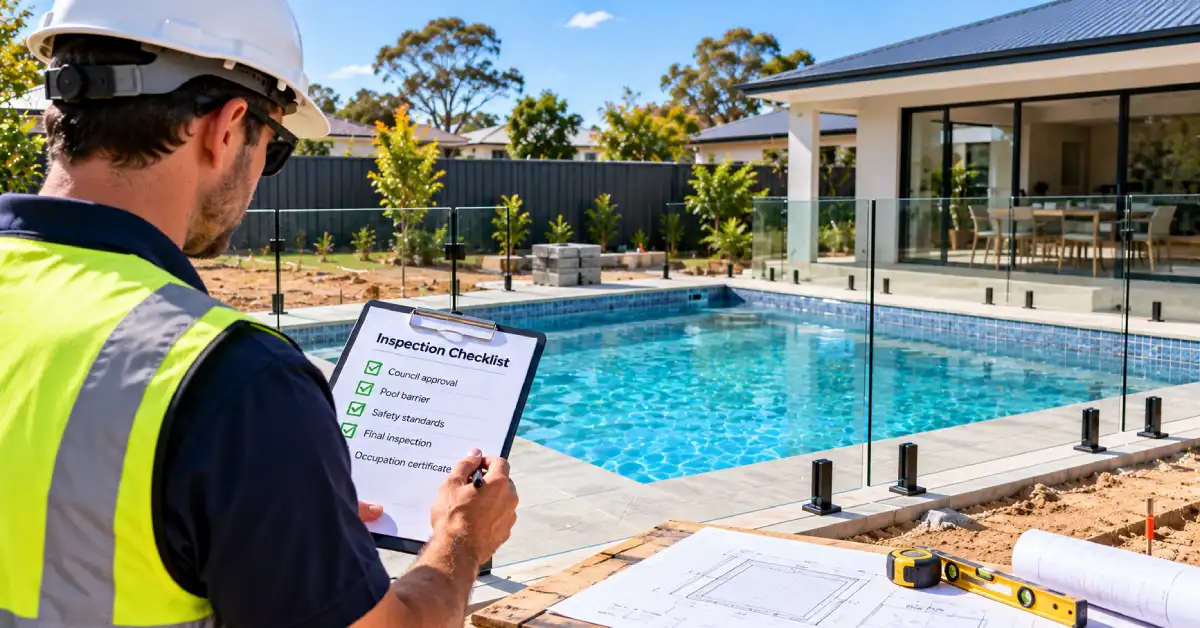
Building a new pool ACT requirements usually include Building Approval, a licensed pool builder, an ACT building certifier, a compliant safety barrier, inspections and final certification before use. Development Approval may not be required where the project meets the ACT’s exemption criteria.
A permanent pool capable of holding water deeper than 300mm normally falls under the ACT building approval system. The safety barrier must also comply with the Building Code and applicable Australian Standards.
New ACT pools are treated differently from many older pools affected by the 2028 transition rules. For pools built on or after 1 May 2023, the applicable barrier standard is the Building Code and referenced Australian Standards in force when the pool is built.
This guide explains the practical approval, barrier and certification pathway for Canberra homeowners.
Key Takeaways
- A new permanent pool deeper than 300mm normally requires Building Approval.
- Development Approval may be exempt when planning conditions are satisfied.
- Swimming pool construction is specialist building work in the ACT.
- An appropriately licensed pool builder is generally required.
- An ACT licensed building surveyor acts as the certifier.
- The required safety barrier must be in place before the pool can hold water.
- The completed barrier must be inspected and certified.
- The pool cannot lawfully be used before the required Certificate of Occupancy and Use.
- New pools follow the Building Code and Australian Standards applying when they are built.
- New pools built after 1 May 2023 do not automatically need a transition-period compliance certificate before 1 May 2028.
Do You Need Approval?
For most permanent residential pools capable of holding water deeper than 300mm, Building Approval is required.
The ACT building approval process generally requires:
- a licensed building surveyor;
- compliant plans;
- an appropriately licensed builder;
- required inspections;
- certificates; and
- compliance with applicable design and construction standards.
The ACT Government explains the current Building Approval process through its official planning guidance.
Development Approval is different.
A swimming pool may be exempt from Development Approval when it satisfies specific planning conditions. These include its location, boundary setbacks and height above existing ground.
Therefore, do not assume that “DA exempt” also means “no Building Approval.”
When Is Development Approval Exempt?
An ACT residential swimming pool can avoid a separate Development Approval when the project satisfies all relevant exemption criteria.
Current ACT planning guidance includes conditions such as:
- the pool is not built between the front boundary and building line;
- it is generally at least 1.5 metres from side and rear boundaries;
- relevant elevated pool structures stay within permitted height limits; and
- the pool reservoir stays within the specified height above datum ground level.
A property may still need Development Approval when the design falls outside those criteria. Heritage controls, unusual blocks and other planning restrictions can also affect the outcome.
Who Can Build a New Pool?
Swimming pool construction is specialist building work in the ACT.
A permanent pool should therefore be constructed by a builder holding the appropriate ACT licence and swimming-pool endorsement.
An ordinary owner-builder licence does not authorise specialist swimming pool construction. This distinction protects owners from using an installer who lacks the required authority.
Before signing a contract, check that the proposed builder holds the appropriate ACT licence for the work.
Who Certifies the Pool?
An ACT licensed building surveyor acts as the building certifier.
The certifier reviews the required plans, inspections and completed work against the Building Act, Building Code and approved documentation.
For a new pool, certification involves more than inspecting the finished water vessel. The certifier also needs to consider the required pool safety barrier.
National Pool Safety provides ACT swimming pool compliance inspections for Canberra and ACT pool owners who need professional barrier assessment.
What Barrier Standard Applies?
For pools built, altered or installed on or after 1 May 2023, the prescribed safety standard is based on:
- the Building Code applying when the pool is built; and
- the Australian Standards referenced by that Building Code.
This is important because new pools do not rely on an old historic barrier standard. They need to meet the modern requirements applying at construction time.
The complete barrier system can include:
- pool fencing;
- gates;
- latches;
- boundary barriers;
- openings;
- non-climbable areas; and
- surrounding structures that influence access.
For a detailed barrier guide, see National Pool Safety’s ACT pool fence requirements.
When Must the Barrier Be Installed?
This is one of the most important building a new pool ACT requirements. Required pool fencing and barriers must be in place before the pool is able to hold water.
This means owners should not treat the fence as something that can be completed well after the pool shell.
The barrier should be planned alongside:
- excavation;
- pool construction;
- paving;
- landscaping;
- retaining walls;
- decking; and
- final access routes.
Late landscaping changes can also affect an otherwise compliant barrier. For example, raised paving or new garden structures can change climbability around the fence.
Does the Barrier Need Inspection?
Yes.
ACT requirements provide that pool fencing and barriers must:
- comply with the Building Code;
- be constructed properly and skilfully; and
- be inspected and certified by an ACT building certifier.
The certifier looks at the completed barrier rather than relying only on the design drawings.
That matters because final ground levels, landscaping and fencing positions can differ from early plans.
Arrange the barrier inspection only when the relevant surrounding work is sufficiently complete for accurate assessment.
Can You Use the Pool Before Certification?
No.
Where a Building Approval is required, the swimming pool cannot lawfully be used until the required Certificate of Occupancy and Use, or COU, has been issued.
Access Canberra states that a COU will not be issued for a swimming pool until a compliant and certified safety barrier has been constructed.
This creates a simple sequence:
| Stage | Requirement |
| Planning | Confirm whether DA is required |
| Before construction | Obtain required Building Approval |
| Construction | Use appropriately licensed builder |
| Before holding water | Required safety barrier in place |
| Completion | Pool and barrier inspected |
| Before use | Certificate of Occupancy and Use issued |
Finishing the pool physically does not automatically make it ready for use.
What Is the Certificate of Occupancy and Use?
A Certificate of Occupancy and Use confirms that required building work has reached the necessary compliance stage for lawful occupation or use.
For new swimming pools, it forms part of the existing ACT building certification framework.
It is separate from the newer pool compliance certificate framework introduced through the home swimming pool safety reforms.
The ACT Government specifically distinguishes these two systems.
A COU addresses approved building work. A pool compliance certificate focuses on whether a regulated pool safety barrier meets prescribed safety standards.
Does a New Pool Need a Compliance Certificate Before 2028?
Not simply because of the 2028 transition deadline.
Pools built, altered or installed on or after 1 May 2013 are not required to obtain a compliance certificate solely because the transition period ends on 1 May 2028.
A new pool must still meet the Building Code and barrier requirements applying to its construction. From 1 May 2028, a compliance certificate can become relevant when an ACT property with a regulated pool is sold or leased.
For a newer pool, a Certificate of Occupancy covering the pool and barrier may be used instead where it is less than five years old.
National Pool Safety’s ACT properties compliance guide explains the requirements by pool construction date.
How Does the 2028 Reform Affect New Pools?
The reforms do not give new pools until 2028 to become safe. Pools built on or after 1 May 2023 already need to meet the Building Code and standards applying when constructed.
The 2028 date mainly marks the end of the broader transition period for ACT residential pool safety reforms.
Owners of older pre-2013 pools face different certification obligations during that transition. For those timelines, see National Pool Safety’s Access Canberra pool compliance guide.
New Pool Checklist
Before using a new ACT pool, confirm:
- the planning pathway has been checked;
- required Development Approval is obtained where applicable;
- Building Approval is in place;
- an appropriately licensed pool builder is appointed;
- an ACT building certifier is appointed;
- the pool barrier matches the applicable Building Code;
- gates and access controls operate correctly;
- the completed barrier has been inspected;
- required certification has been completed; and
- the Certificate of Occupancy and Use has been issued before use.
Keep the certificates and approved documents after completion. They may become useful when the property is later sold or leased.
Frequently Asked Questions
Q1: Do I need Building Approval for a new pool in the ACT?
Generally, yes, when the pool can hold water deeper than 300mm. Specific exemptions apply to some demountable pools.
Q2: Does every ACT pool need Development Approval?
No. A pool may be DA exempt when it satisfies the relevant ACT planning exemption criteria.
Q3: Can I build my own swimming pool in Canberra?
Swimming pool construction is specialist building work. An ordinary owner-builder licence does not authorise this work.
Q4: When must the pool fence be installed?
Required pool fencing and barriers must be in place before the pool is able to hold water.
Q4: Who inspects a new ACT pool barrier?
An ACT licensed building surveyor certifies the barrier as part of the building certification process.
Q5: Can I swim before the Certificate of Occupancy?
No. Where a COU is required, the pool cannot lawfully be used before the certificate is issued.
Plan Barrier Compliance Early
Building a new pool ACT requirements are easier to manage when the safety barrier is planned before construction begins.
Fence position, gates, landscaping, retaining walls and finished ground levels can all affect the completed barrier.
National Pool Safety provides professional pool barrier inspections throughout Canberra and the ACT.
Planning a new swimming pool in Canberra? Contact National Pool Safety to have the proposed or completed pool barrier assessed before certification and pool use.