Pool Fence Distance From Pool NSW: How Close Can It Be?
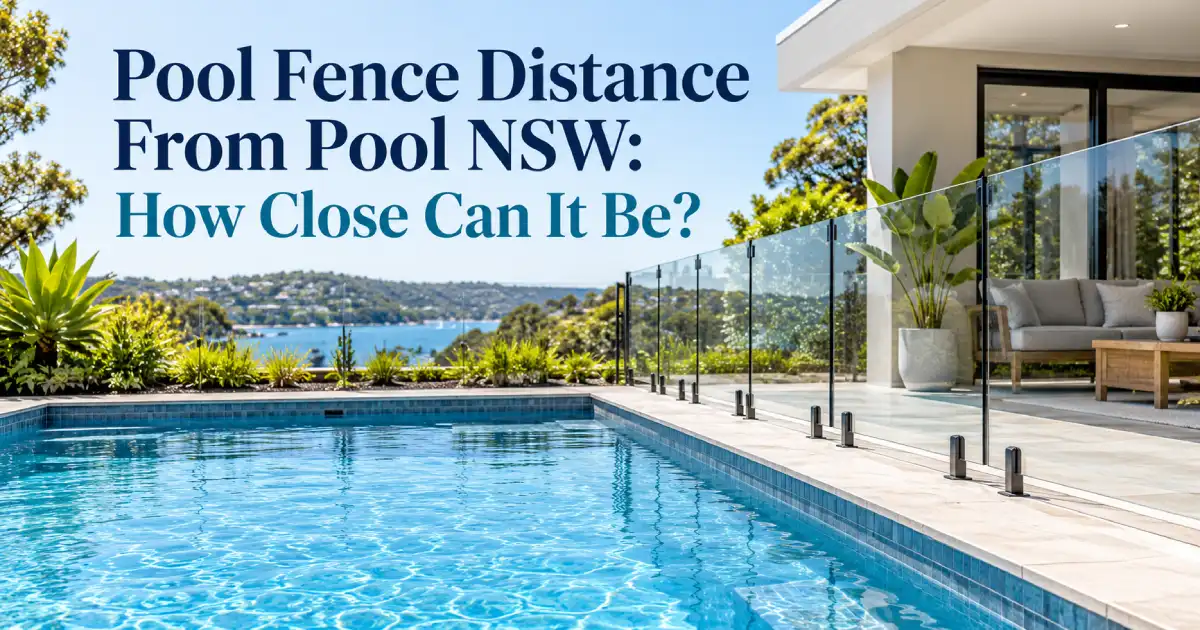
Pool fence distance from pool NSW rules do not set one universal minimum distance between the pool edge and an internal safety fence. A fence can sit relatively close to the pool if the complete barrier still meets height, gap, gate, non-climbable-zone, access and applicable approval requirements.
Current NSW Government pool safety guidance requires standard barriers to be at least 1200mm high and maintains a 900mm non-climbable zone. The pool-side clearance can also extend 300mm where relevant.
This guide is for NSW homeowners planning a new fence, landscaping, decking or barrier changes. National Pool Safety holds NSW licence and inspects pool barriers across Queanbeyan, Googong, Jerrabomberra, Bungendore, Yass, Murrumbateman and surrounding NSW areas.
Key Takeaways
- There is no single NSW rule saying every pool fence must sit a fixed distance from the pool edge.
- Fence placement depends on the complete barrier layout.
- Standard pool fencing is generally at least 1200mm high.
- Boundary barriers are generally at least 1800mm high.
- A 900mm non-climbable zone must remain clear where applicable.
- Relevant pool-side clearance can extend 300mm inside the barrier.
- Pool setbacks from property boundaries are separate from pool fence placement rules.
- Decking, retaining walls, steps and landscaping can affect a compliant fence location.
How Close Can a Pool Fence Be?
A pool fence can be relatively close to the pool edge if its location still creates a compliant child-resistant barrier. NSW does not publish one universal minimum fence-to-water distance for every residential pool.
The correct position depends on:
- finished ground level;
- fence height;
- non-climbable zones;
- gates and access;
- decking;
- retaining walls;
- nearby buildings;
- landscaping.
This is why two similar pools can need different fence layouts.
A narrow paved area may work on one site. The same distance may create a problem elsewhere because of steps, raised ground or climbable structures.
Is There a Minimum Distance?
There is no general NSW requirement stating that an internal pool fence must always be, for example, 500mm or 1 metre from the water.
The safety rules focus on whether the barrier prevents unsupervised access.
Current NSW guidance instead specifies requirements such as:
| Compliance Item | Current NSW Guidance |
| Standard pool barrier height | At least 1200mm |
| Boundary barrier height | At least 1800mm |
| Maximum common bottom gap | 100mm |
| Main NCZ | 900mm |
| Relevant pool-side clear zone | 300mm |
These measurements do not create a universal fence-to-pool-edge distance.
Owners should therefore avoid choosing a fence line using one online setback figure without checking what that figure actually refers to.
For the wider technical standard, see National Pool Safety’s AS 1926.1 pool fence requirements NSW guide.
What Clearance Is Required?
The most important clearance around many pool barriers is the non-climbable zone, not the distance from the water.
NSW Government guidance requires a 900mm NCZ around relevant pool fencing. Trees, furniture, ladders, pots and similar climbable objects must stay clear of that zone.
The guidance also identifies a 300mm area inside the pool fence that should remain free from potential footholds or handholds where relevant.
This can influence fence placement.
For example, placing a fence very close to:
- raised pool coping;
- a retaining wall;
- a step;
- built-in seating;
- a raised garden bed;
The issue is not simply how close the fence is to the water. The question is whether nearby features compromise the barrier. See our detailed non-climbable zone pool fence NSW guide for NCZ measurements.
Pool Setback vs Fence Distance
Pool setback and pool fence distance from pool NSW are two different planning questions.
A pool setback controls where the pool itself can sit relative to a property boundary. Pool-barrier rules control access to the water.
Under the NSW complying-development pathway, the NSW Planning Portal states that a swimming pool waterline generally needs at least 1 metre setback from a side or rear boundary.
That does not mean the pool safety fence must be 1 metre from the pool.
A property going through a development application may also have different planning conditions.
Always separate these questions:
- Where can the pool be built?
- Where can the compliant safety barrier be positioned?
Confusing the two often leads to incorrect fence layouts.
How Does Decking Affect Placement?
Decking can change the effective pool fence height and available clearances.
A fence is assessed from the relevant finished ground or accessible surface. Therefore, adding raised decking beside an existing fence can reduce its effective height.
Steps can also create footholds.
Before building or altering decking, check:
- finished deck height;
- fence height from the deck;
- steps near the barrier;
- bottom fence gaps;
- nearby handholds;
- NCZ clearance.
Do this before fixing the final fence position. Moving the fence later can be significantly harder once paving, glass panels or landscaping are finished.
Do Retaining Walls Change the Distance?
Yes. A retaining wall can influence where a pool fence should sit because it changes accessible ground levels and can create a climbing point.
A wall close to the barrier may reduce effective height. Its top can also act as a foothold.
Where the fence is installed on top of a retaining wall, the complete wall-and-fence arrangement needs assessment. This issue is particularly common on sloping blocks in Yass, Bungendore, Murrumbateman and other areas around Canberra.
For complex level changes, read our guide to pool fence retaining wall NSW requirements once that cluster page is published.
Can the Fence Be Close to Pool Coping?
Potentially, yes.
There is no automatic rule that requires a large walkway between the pool coping and every internal barrier.
However, the coping, raised edges and surrounding surfaces must not create prohibited climbing opportunities.
Practical access also matters.
Owners should leave enough usable space for safe movement and maintenance, but that practical design consideration is different from a statutory universal fence-to-water setback.
For glass barriers, panel gaps, gate operation and installation also need consideration. See glass pool fence regulations NSW.
Boundary Fences and Tight Spaces
Small yards often have limited room between the pool, house and property boundary.
A compliant boundary fence may sometimes form part of the pool barrier.
Current NSW guidance generally requires a boundary barrier forming part of the pool enclosure to be at least 1800mm high.
The surrounding NCZ also matters. A boundary fence should not be assumed compliant simply because it is tall. Ground levels, adjoining structures and climbable features still require assessment.
National Pool Safety’s existing guidance Pool Boundary Fence Ideas explains common boundary-fence layouts.
What About Fence Gaps?
Fence placement cannot create excessive openings beneath or around the barrier. Current NSW rules generally limit the bottom gap beneath many standard barriers to 100mm.
This is especially important where:
- paving slopes;
- soil falls away;
- drainage crosses the fence line;
- panels meet retaining walls;
- landscaping changes the ground level.
A fence location that looks suitable on a plan can develop an excessive gap after the finished surfaces are installed. See the pool fence gap requirements NSW guide for detailed opening measurements.
Fence Placement Decision Table
Use this simple check before choosing a fence line.
| Site Feature | What to Check |
| Pool coping | Does it create a foothold near the barrier? |
| Decking | Does the deck reduce effective fence height? |
| Steps | Are they inside the NCZ? |
| Retaining wall | Can its top be climbed from? |
| Landscaping | Will plants or garden beds enter the NCZ? |
| Boundary fence | Is it high enough and suitably configured? |
| Gate | Can it open, close and self-latch correctly? |
| Ground slope | Will bottom gaps remain compliant? |
This table is a planning check only. It does not replace a formal pool barrier assessment.
Before Installing a Fence
Before finalising pool fence distance from pool NSW, review the entire proposed barrier rather than measuring only from the pool edge.
Check the layout after all planned paving, decking and landscaping are included.
Then confirm:
- the applicable Australian Standard;
- final ground levels;
- barrier height;
- NCZ clearance;
- bottom and vertical gaps;
- gate position and operation;
- surrounding structures.
If you are changing an existing barrier, be cautious. NSW Government guidance states that barrier alterations can trigger current requirements and may end previous exemptions.
Frequently Asked Questions
Q1: How far must a pool fence be from the pool in NSW?
There is no single minimum fence-to-pool-edge distance that applies to every NSW pool. The barrier must instead meet applicable height, NCZ, gap, access and safety requirements.
Q2: Can a pool fence be right beside the coping?
It can be relatively close where the complete layout remains compliant. Coping, raised surfaces and nearby structures must not create climbing opportunities.
Q3: Is the pool fence required to be 1 metre from the pool?
No. The 1-metre figure often relates to the pool waterline setback from a side or rear property boundary under certain planning pathways, not the fence-to-pool distance.
Q4: What is the 900mm pool fence rule?
The 900mm rule generally refers to the non-climbable zone around relevant pool barriers. Climbable objects must stay outside this area.
Q5: Does decking affect pool fence distance?
Yes. Decking can change finished surface levels, effective fence height and climbing opportunities around the barrier.
Q6: Should fence placement be checked before installation?
Yes. Checking the proposed layout before fencing, decking and landscaping are completed can prevent expensive compliance changes later.
Get the Fence Position Checked
Pool fence placement is rarely about one measurement from the water. The correct position depends on the complete barrier, surrounding levels and nearby structures.
National Pool Safety can assess pool fencing, gates, clearances, NCZs and complex barrier layouts across Canberra’s surrounding NSW service areas.
Planning a new fence or unsure whether your existing layout is compliant? Arrange a professional pool barrier assessment with National Pool Safety before committing to costly fencing, paving or landscaping changes.